How Many Items Should You Bring to a Craft Fair? A Simple Formula
"How many items should I bring?" is the single most common question first-time craft fair vendors ask — and for good reason. Bring too little and you're packed up by noon with money left on the table. Bring too much and you've spent weeks making inventory that sits in bins in your garage. Finding the sweet spot takes a bit of math and a bit of experience.
Here's a straightforward approach that works for most vendors, whether you're selling jewelry, pottery, candles, or woodwork. If you're brand new to vending, start with our beginner's guide to craft fair vending for the full picture.
 Photo from Pexels
Prefer to skip the math? Use our inventory calculator to plug in your numbers directly.
The 2–3x Rule
The simplest formula: bring 2 to 3 times the dollar amount you expect to sell.
If your sales goal for the day is $500, bring $1,000 to $1,500 worth of product. If you're aiming for $1,000 in sales, bring $2,000 to $3,000 in inventory.
Why so much more than your goal? Two reasons:
- Selection drives sales. A booth that's full and varied invites browsing. A booth with gaps and empty spots signals "you missed the good stuff" — even if the fair just opened. For tips on making your display work harder, see our guide to booth displays that increase sales.
- You can't predict exactly what will sell. The items you think will fly off the table might sit, while something you almost didn't bring sells out. Extra inventory gives you coverage.
The Unit-Based Formula
If you prefer to think in units rather than dollars, here's the math:
- Set your sales goal. Let's say $600.
- Calculate your average item price. If most of your items are in the $20–$30 range, call it $25.
- Divide. $600 ÷ $25 = 24 items to sell.
- Multiply by 2.5. 24 × 2.5 = 60 items to bring.
That gives you a solid buffer. If you sell more than expected, great — you had the stock. If sales are slower, your booth still looks full and inviting at 3 p.m.
Adjust for Your Product Category
The formulas above are a starting point, but the multiplier shifts depending on what you make:
Small, lightweight items (jewelry, stickers, candles, soap): Use the higher end — bring 3x or even 4x your sales goal. These items are easy to transport, take up little space, and shoppers expect a wide selection. A jewelry vendor with 20 pieces looks sparse; one with 150 looks like a destination.
Mid-size handmade goods (pottery, bags, cutting boards, knitwear): The 2.5x multiplier works well here. These take more effort to produce and transport, but you still need enough variety to fill a table and cover different tastes.
Large or high-value items (furniture, large art, quilts): Bring 1.5–2x. You can't physically bring 60 pieces, and you don't need to — these sell on craftsmanship, not volume. Focus on having a few stunning anchor pieces and fill in with smaller complementary items if you have them.
Craft Fair Inventory Calculator
Figure out how much to bring based on your goals, product type, and fair size.
Your Inventory Plan
Suggested price tier breakdown:
Based on $600 goal × 2.5x multiplier (mid-size handmade) at $25 avg price.
Attendance Gut-Check
Optional: pick a fair size to sanity-check your numbers against expected foot traffic.
Use Attendance Numbers to Gut-Check
Most fair organizers will share attendance figures from previous years if you ask. Use them as a sanity check:
- Expect 1–3% of attendees to buy from your booth. That's a typical conversion rate for craft fairs.
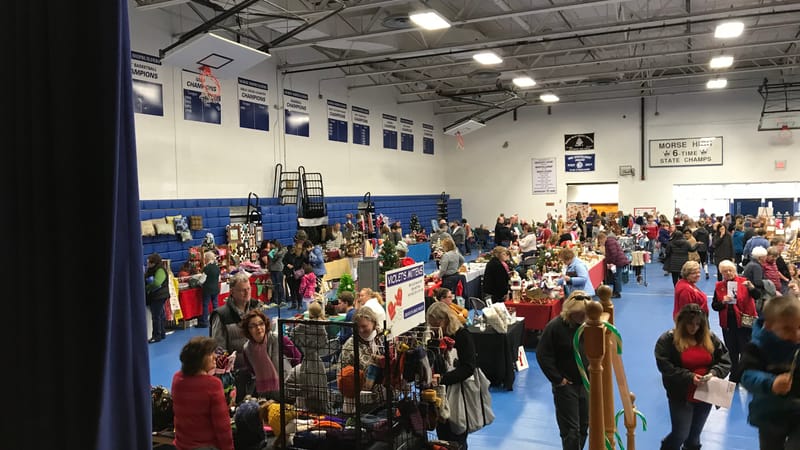
- At a small community fair with 500 attendees — like the Blue Hill Fair — plan for roughly 5–15 sales.
- At a large agricultural fair like the Fryeburg Fair drawing tens of thousands over 8 days, your daily foot traffic is much higher — plan for 30–80+ sales per day you're vending.
- At a major event like the Big E (over a million visitors across 17 days), the math changes entirely — you'll need deep backstock and possibly a way to restock mid-run.
Your product, your price point, your booth placement, and even the weather all affect the number. But grounding your estimate in real attendance rather than hope makes a big difference. You can find attendance and scale information for hundreds of New England events on Meet Me at the Fair.
Plan for New England's Fair Season Arc
Fair season in New England runs from June through October, and the events ramp up dramatically. How you plan inventory should follow that arc:
Early summer (June–July) brings smaller community fairs, strawberry festivals, and craft markets. Attendance is lower and the vibe is casual — these are good test runs for new products. Bring your standard 2.5x and use these to calibrate what sells.
Late summer (August–September) is when the big agricultural fairs begin. Events like the Common Ground Country Fair draw committed buyers who are specifically looking for handmade and locally produced goods. Bring heavier inventory, especially in the mid-range price tier.
Peak fall (September–October) is the most intense stretch — Fryeburg, Deerfield, Topsfield, and the Big E all land in this window. If you're doing back-to-back weekends, you need a production and restocking plan, not just a packing plan. This is where the Maine Made trade show grants can help offset the cost of scaling up production.
For help mapping out your season, see our New England fair season road trip guide.
Spread Across Price Points
Don't just bring 60 of the same thing. A mix of price points keeps every type of shopper engaged:
- $5–$15: Impulse buys. Small, easy-to-grab items that require zero deliberation. Stickers, keychains, small candles, simple jewelry. These are also great "add-on" purchases — and they keep your payment app busy with quick transactions.
- $20–$50: Your core range. This is where most fair sales happen. These should make up the bulk of your inventory.
- $75+: Anchor pieces. These set the tone for your booth and communicate quality. They won't sell in volume, but they make everything else look like a deal by comparison — and when one does sell, it makes your day.
A common mistake is bringing only mid-range items. Without the low end, browsers leave empty-handed. Without the high end, your booth doesn't have a "wow" factor.
Keep Your Booth Looking Full
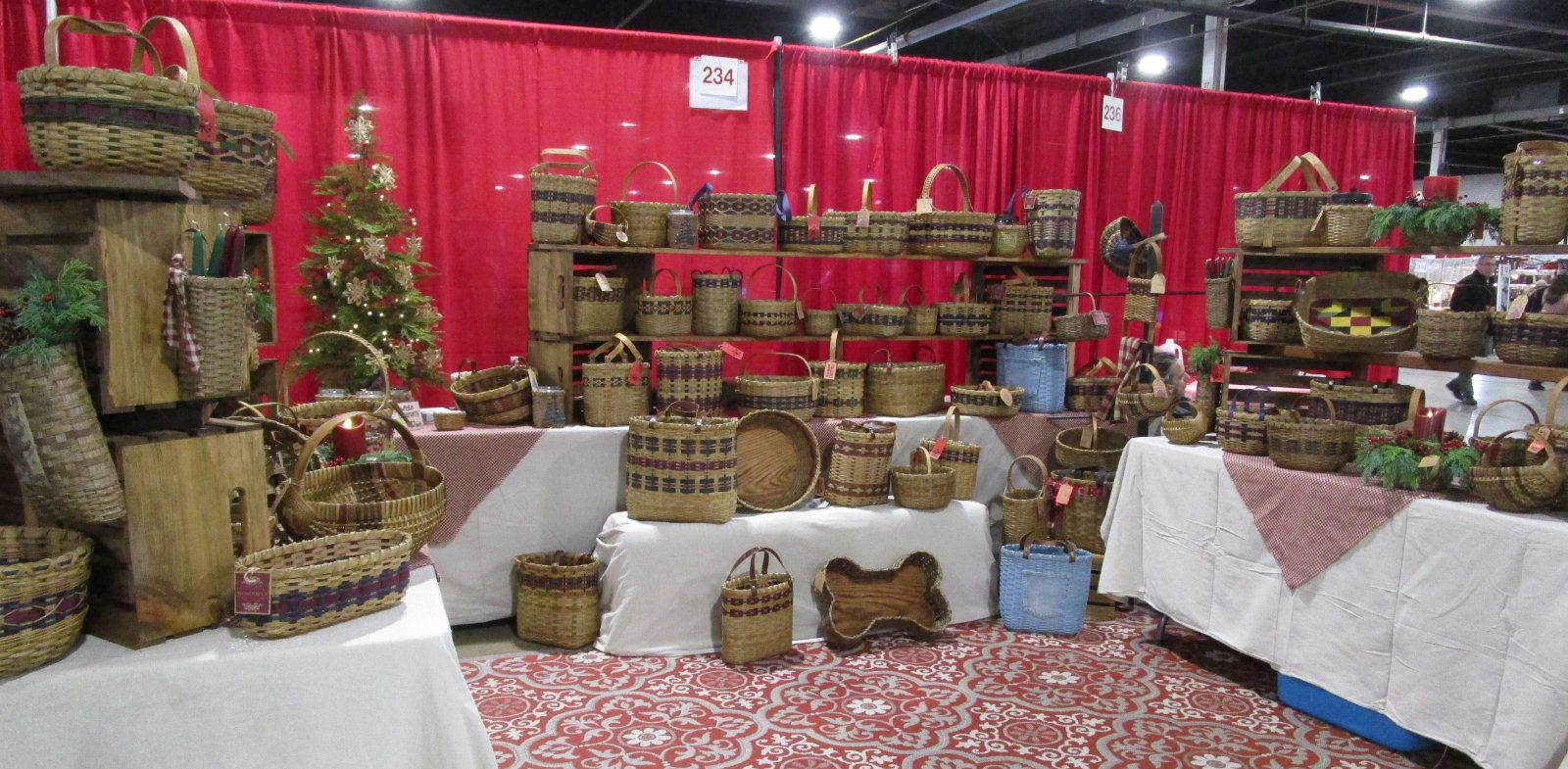
This is the part new vendors underestimate. Your booth at 3 p.m. should look almost as full as it did at 9 a.m. That means:
- Bring backstock. Keep extra inventory under the table or in bins behind your booth. As items sell, refill the gaps.
- Rearrange as you go. When a section starts looking thin, consolidate and spread out what's left so the table doesn't look picked over. Our booth display guide covers layout strategies that make rearranging easier.
- Shrink your footprint if needed. If you're running low on a particular category, pull the display closer together so it still looks intentional rather than depleted.
A half-empty booth tells shoppers the best stuff is gone. A full booth tells them they're right on time.
What If You're Not Sure?
If this is your very first fair and you have no sales history to work from, here's the simplest possible starting point:
Bring at least double the dollar value of your booth fee.
If your booth costs $150, bring at least $300 in product — and aim for much more. This at least ensures you can cover your costs if things go reasonably well, while you gather the real-world data you need to plan better next time. And make sure you have vendor insurance sorted before you go — many fairs require it with your application.
After your first fair, track everything. The data you collect becomes your inventory formula for fair number two.
Post-Fair Tracking Template
Here's what to write down after every fair. This is the single best tool for dialing in your inventory over time:
Event info: Fair name, date, location, estimated attendance, weather, your booth location (corner? center aisle? near entrance?)
Inventory brought: Total items by category, total retail value
Sales results: Total revenue, number of transactions, items sold by category, best-selling item, worst-selling item
Price point breakdown: How many sales at $5–$15 / $20–$50 / $75+? Which tier moved fastest?
Timing: What time did sales peak? Was there a dead stretch? Did you sell out of anything before closing?
Booth notes: Did your display work? What would you change? Did people ask for anything you didn't have?
Bottom line: Did you bring too much, too little, or just right? What's your adjusted multiplier for next time?
After 3–4 fairs with this data, you'll stop guessing and start knowing. Keep a simple spreadsheet or a notebook dedicated to fair results — either works. The vendors who track this consistently are the ones who consistently sell out.
Build Your Customer Base Beyond the Fair
The sale at the booth is just the beginning. Collecting email addresses at every fair turns one-day shoppers into repeat customers who buy online between events. Our guide to building an email list at craft fairs covers exactly how to do this.
State-Level Craft Fair Guides
Ready to find craft fairs in your region? Check out these comprehensive guides for state-specific craft fair opportunities:
- Craft Fairs in Maine 2026: A Vendor's and Visitor's Guide — Maine's best craft fairs and artisan markets
- Craft Fairs in New Hampshire 2026: A Vendor's and Visitor's Guide — League of NH Craftsmen and destination shows
- Craft Fairs in Vermont 2026: A Vendor's and Visitor's Guide — Vermont Sheep & Wool Festival and year-round markets
- Craft Fairs in Massachusetts 2026: A Vendor's and Visitor's Guide — Massachusetts craft fairs and shows
State-Level Fair & Festival Guides
Looking for fairs and festivals across the broader New England region? Check out these comprehensive state guides:
- Connecticut Fairs and Festivals 2026: Your Complete Guide — Connecticut's festivals, agricultural fairs, and vendor opportunities
- Rhode Island Fairs and Festivals 2026: Your Complete Guide — Rhode Island's annual events and craft fair circuit
Last updated: April 2026